



 Watch here for everything you wanted to know about surgical and non-surgical cosmetic medicine including eyelid surgery, botox, varicose & spider vein treatment!


Entries in botox (7)
Botox and filler at any age
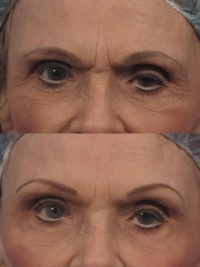
This patient (who graciously allowed us to post her before and after photos) may be advanced in age but she is young at heart, and she wanted to express that to everyone around her. She had 2 simple non-surgical treatments to help her acheive that goal: Botox and filler. These are injectable treatments that are performed in the office at Allure Medical Spa, with minimal to no downtime and dramatic results.
Botox is used to relax the muscles that cause frown lines. When used between the brows and around the crow's line wrinkles, the eyebrows are lifted and the wrinkles are softened at the same time. This effect will last for 3-6 months after the treatment.
Dermal filler (Juvederm Ultra Plus in this case) is a soft, biocompatible gel was injected underneath the eyebrows, in the grooves under the eyes, and in the sunken cheeks to lift and rejuvenate these areas. Juvederm Ultra can last many months in these areas.
If you are looking to express your inner age with cosmetic treatments such as Botox or Juvederm, visit our main website or schedule a free consultation appointment at one of our Michigan locations, Shelby Township or Livonia.
 Allure
in age, allure, botox, brow lift, dermal filler, juvederm, macomb, michigan
|
Comments Off
Allure
in age, allure, botox, brow lift, dermal filler, juvederm, macomb, michigan
|
Comments Off
Xeomin is a Botox alternative and is coming to Michigan!

New laser treatment for axillary hyperhidrosis
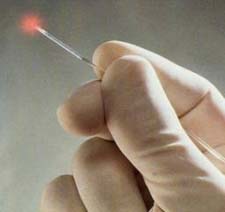
Excess armpit sweating (axillary hyperhidrosis) is a condition that can interfere with daily living and social interactions. In the past, treatments have included invasive thoracic surgery or painful Botox injections. There is a new treatment that uses a laser to heat the sweat glands found inside the skin. This laser treatment can provide relief for many who suffer from this condition.
A recent description of the laser armpit sweating treatment was published by Dr. Brett Kotlus in the Journal of Cosmetic and Laser Therapy, linked here. The treatment is done under local anesthesia and takes approximately 30 minutes.
Allure
in armpit sweating, axillary hyperhidrosis, botox, cosmetic and laser therapy, kotlus, laser, michgan
|
Comments Off
BOTOX for headaches and wrinkles
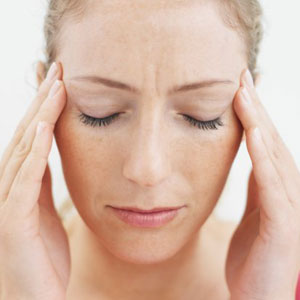
In October 2010, the FDA cleared the wrinkle filler Botox® to treat headaches.
Botox® has long been the most popular world-wide anti-wrinkle treatment with millions of people experiencing it's rather amazing effects.
Botox® for Headaches:
For years we have observed that people with chronic headaches can get substantial relief when we perform cosmetic Botox® . A large study was done comparing Botox® to placebo (salt water) injected into various muscles of the scalp, and the Botox® relieved headaches better than placebo.
What was interesting was where they chose to inject the Botox® for the headaches, and the amount of response that was noticed. In my practice, I treat people every day with Botox® Many of these patients have a history of headaches, even though that is not what they are there for. When asked about headaches on subsequent visits, they often note that they had a substantial reduction in headaches. In fact, many times I hear from my patients "I know my Botox® is wearing off, because I am getting the headaches again". This was why they decided to do a study: To prove what we have observed, that is, Botox® injected for wrinkles relieves headaches. And this is after injecting Botox® in a standard pattern for wrinkles. In the FDA study, they injected in a totally different fashion, and had only a marginal improvement over placebo.
What can this mean? When a study is done for the FDA, they are looking to prove it works and it is effective. They did that. From here we will probably see several studies to see if injectors like myself and others have observed "a better way". Now that it is approved (Botox® for headaches), there will be substantial interest, progress, and adaptation of the use of this amazing medication for a sometimes debilitating painful condition.
Botox® for Wrinkles:
Botox® works by weakening the connection of nerves and muscles. Wrinkles that are caused by repeated overuse, or even normal use of muscles include the "crow's feet" wrinkles on the sides of the eyes, the deep frown between the eyes, and the forehead horizontal lines. There is virtually no treatments that come anywhere close to the effects of Botox® for these lines, not even plastic surgery.
Botox® is typically injected right into the muscles that cause the wrinkles, and is very dose dependant, so the doctor doing the injection needs to understand the anatomy of the muscles as well as be able to estimate the ideal dose for any individual. I evaluate the size of the muscle by having the patient look into a mirror and frown, squint, and raise the forehead.
If you look in a mirror and do a strong frown, you will see that your brow lowers and you develop a crease between your eyes. But you can also see the outline of the muscles that are like bat wings. These bat wing muscles cause the vertical lines. In the very middle of your eyes is a muscle that runs up and down, and this can cause horizontal lines, and is also responsible for the brow dropping over time.
When we use Botox® for these wrinkles, not only do we see improvement or vanishing of the wrinkles, but the brow elevates and creates a more refreshed, happy, and youthful look. I think of it like this: "They come in for the wrinkles, and stay for the brow", because individuals are pleasantly surprised to see the refreshed look of the tired eyes that seemingly had nothing to do with their wrinkles.
Dr Charles Mok
BOTOX is more than a wrinkle treatment?
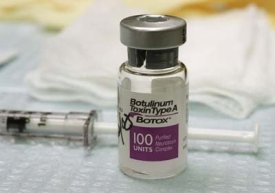
English researchers have found a way to modify the BOTOX molecule with to be used for other medical purposes. A new report describes that rebuilding the components of the most popular injectable wrinkle treatment in the world may allow it to be used for Parkinson's disease, cerebral palsy, and chronic migraines.
The new formulation could produce pain relief for as long as BOTOX lasts- usually 4 to 6 months. The current form of the product is already used by many doctors for spasms and other conditions not related to the well-known cosmetic applications.
The widespread use of BOTOX stemmed from its original human use to treat eye muscle disorders. A Canadian doctor observed that it was also improving wrinkles in these patients. Since then, Allergan's BOTOX became a blockbuster success in treating frown lines.
Allure
in allergan, botox, lego, migraine, palsy, parkinson's, research, wrinkle
|
Comments Off
|
 1 Reference